
Wastewater from poultry processing: Arguments for advanced modular treatment
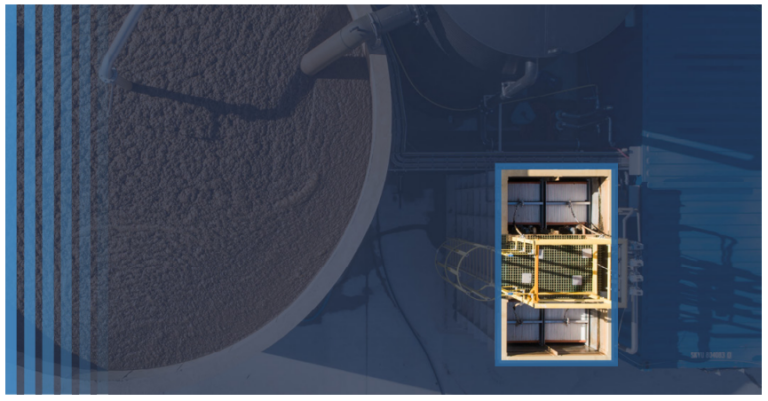
Anyone working in poultry processing will recognize three parallel trends when it comes to water and wastewater treatment: On the one hand, wastewater streams are becoming increasingly challenging to manage, and the expectations around discharge quality, from regulators, water authorities, and local communities, are steadily rising. On the other hand, the water intake quotas are imposed on freshwater intake. These shifts are reshaping how wastewater treatment systems are designed and by applying robust modular proven technologies that enable large-scale water reuse schemes.
Wastewater from poultry slaughtering is consistently high in organic load, fats, suspended solids, and nutrients. Recent European case studies (1–3) confirm that chemical oxygen demand (COD), biochemical oxygen demand (BOD), and fat concentrations in poultry processing wastewater regularly exceed typical industrial discharge thresholds, often by a wide margin. These values also fluctuate strongly during production and cleaning cycles. This combination of high load and variability explains why poultry wastewater remains difficult to treat with conventional, linear treatment trains alone.
Why conventional treatment approaches are under pressure
Conventional treatment systems for poultry wastewater, typically combining screening, flotation, and activated sludge processes still play an important role. But recent studies (1–5) consistently highlight their limitations:
- Sensitivity to peak loads during slaughtering and cleaning
- Difficulty of handling high fat and protein concentrations
- Limited nutrient removal without additional treatment steps
- Increasing space constraints for expansions on existing sites
- Limitation in water reuse possibilities
As wastewater discharge requirements become increasingly stringent, the margin for operational instability continues to shrink. In practice, many existing systems are reaching their limits.
Membrane Bioreactor (MBR) technology as a technical solution
Given these developments, the poultry processing industry is increasingly evaluating advanced wastewater treatment concepts that prioritize process stability and control over treatment capacity alone.
One such solution is Membrane Bioreactor (MBR) technology. Not because it is legally required, but because its performance characteristics align with today’s regulatory requirements and operational expectations:
- Stable effluent quality, even under fluctuating influent conditions
- Effective removal of biomass and suspended solids
- Smaller footprint compared to conventional biological treatment systems
- Improved process control for the removal of organic matter and nutrients
- Effluent quality that meets discharge regulations and is suitable for water reuse
- Straightforward integration into existing treatment plants, enabling increased treatment capacity by upgrading conventional activated sludge systems to MBR technology
In practice, MBR technology is increasingly being adopted by poultry processors that need to comply with stricter discharge limits, expand their wastewater treatment capacity, or enable water reuse – all while operating within existing site space constraints.
Advantages of MBR over Pressurized Ultrafiltration (P-UF) for water reuse applications
Integrated Permeate Channel (IPC) MBR membrane technology has been successfully implemented at a large poultry processing plant in Poland, where regulatory constraints required the operator to close the water loop.
The facility generates approximately 10,000 m³ of wastewater per day, while both freshwater intake and wastewater discharge are limited to 6,000 m³ per day. To meet these requirements, the IPC MBR membrane system replaced part of the existing pressurized ultrafiltration (P-UF) system used to produce water for reuse.
Several key findings confirmed the decision to continue using IPC membrane technology in future operations. Operating with a mixed liquor suspended solids (MLSS) concentration of 12 g/L in the membrane tank, the MBR system required significantly less space – approximately 50 m², compared to 400 m² for the P-UF installation.
The MBR system also demonstrated greater operational reliability. The existing sand filters were prone to clogging, while the P-UF system experienced operational issues related to elevated levels of extracellular polymeric substances (EPS). In addition, the MBR consistently produced higher-quality effluent, achieving a turbidity of 0.1 NTU, compared with 0.3 NTU for the P-UF system.
Operating costs were also lower, owing to automated cleaning procedures and substantially reduced energy consumption.
Modular and Containerized Wastewater Treatment: Design Flexibility Is Key
Increasingly, modular and containerized wastewater treatment concepts are being adopted as a design approach. These concepts divide treatment systems into functional units that can be implemented, expanded, or adapted over time.
This allows complex treatment processes to be adapted to site constraints and long-term operational planning, without locking the operator into a fixed plant configuration.
For advanced biological treatment, this approach is often combined with Membrane Bioreactor (MBR) technology, in which membranes form a critical separation step within the overall treatment process. As a result, the membrane system must be fully integrated into the biological, hydraulic, and process control design of the installation.
At Blue Foot Membranes, our membrane technology is designed for both conventional full-scale treatment plants and modular or containerized wastewater treatment systems. These solutions can be tailored to site-specific conditions, regulatory requirements, and long-term operational strategies.
Our approach combines high treatment capacity with a compact footprint, while avoiding much of the complexity associated with traditional plant construction.
For poultry wastewater treatment projects, this design flexibility makes it possible to develop solutions that are specifically tailored to performance requirements, available space, and future expansion or water reuse objectives – without imposing a one-size-fits-all plant architecture.
Looking ahead
Wastewater from poultry processing is no longer just a secondary concern. Scientific evidence, evolving regulations, and operational experience all point in the same direction: performance, process stability, and adaptability are becoming the defining measures of successful wastewater treatment.
As a result, wastewater treatment is increasingly viewed as a strategic investment rather than simply a compliance requirement. Future-ready treatment systems must not only meet today’s operational demands but also accommodate evolving regulations, higher water quality expectations, and the growing need for water reuse.
Literature
[1] Karahmet et al. (2024): Characterization of wastewater from slaughterhouses and optimization of its final treatment, Global Research in Environment and Sustainability, December 2024, Vol 2, No. 9, pp. 01-08. DOI: https://doi.org/10.63002/ gres.29.693 [2] Ashilenje et al. (2025): A literature review of slaughterhouse waste valorisation: Techniques, environmental and economic implications, Resources, Conservation and Recycling, Volume 224, January 2026, 108571. DOI: https://doi.org/10.1016/j. resconrec.2025.108571 [3] T. Kaechiyappan et al.: A review on sustainable poultry slaughterhouse wastewater management based on electrochemical technology, Desalination and Water Treatment, Vol 322, April 2025, 101212. DOI: https://doi.org/10.1016/j. dwt.2025.101212 [4] Z. Kaskote et al.: Poultry slaughterhouse wastewater treatment using nanobubble technology, Water Practice and Technology (2025) 20 (6): 1407–1421. DOI: https:// doi.org/10.2166/wpt.2025.086 [5] S. O. Dada et al.: Innovative Approaches to poultry processing wastewater treatment: the stainless steel ultrafiltration membrane as a viable option, Membranes 2023, 13 (11) 880. DOI: https://doi.org/10.3390/ membranes13110880